What's in this lesson
Explore the infrastructure layer enabling modern AI systems to securely connect with tools, memory, and external environments through the Model Context Protocol (MCP). We'll cover architecture, primitives, tool discovery, structured context exchange, and sandboxed execution.
Why this matters (WIIFM)
AI models are no longer isolated brains. To build practical agentic applications (like coding assistants or research agents), AIs need secure, scalable ways to access real-world tools. MCP is the open standard that makes this interoperability possible without building custom integrations for every new tool.
The Isolated AI vs The Connected AI
Traditionally, Large Language Models (LLMs) have been isolated—like a brilliant brain trapped in a glass box. They know vast amounts of information up to their training cutoff, but they cannot fetch a live web page, query your local database, or execute code.

Experience the difference
Toggle the state of the AI model to see how connectivity changes its capabilities.
Introduction to the Model Context Protocol
If you wanted to give an AI access to GitHub, Slack, and a local PostgreSQL database, you previously had to write custom API integrations for each one. This resulted in fragmented, brittle codebases.
The Model Context Protocol (MCP), introduced by Anthropic as an open standard, solves this. It acts as a universal plug—a "USB-C for AI applications". It standardizes secure, two-way communication between AI models and external data sources or tools.
Before MCP
Custom scripts for every integration. High maintenance, low security.
After MCP
Standardized protocol. Build a server once, any client can connect.
The Architecture of MCP
MCP follows a specific client-server architecture designed to keep the AI model, the host application, and the tools cleanly separated.
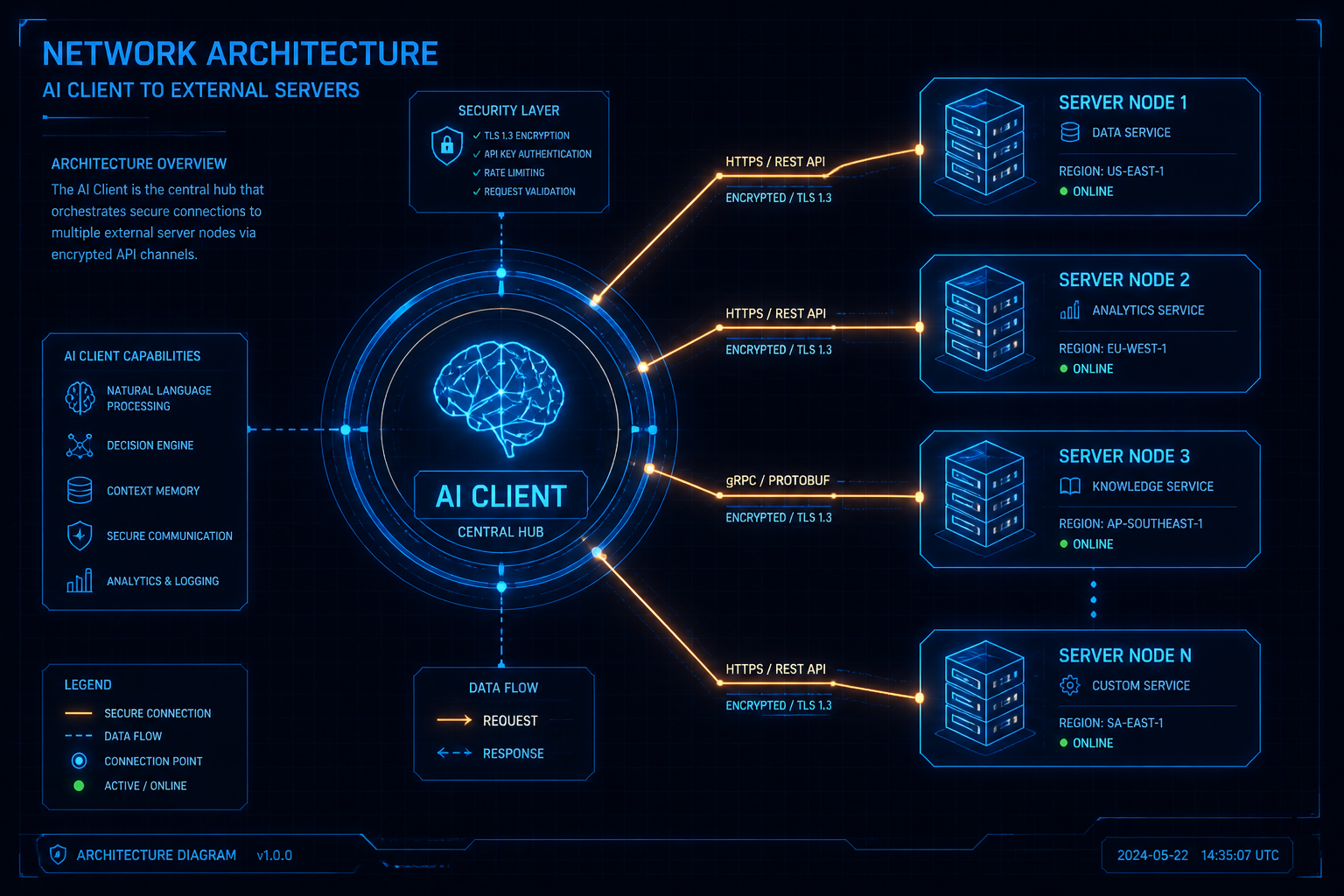
Interactive Architecture Map
Click on each component to understand its role.
Core Primitives
MCP defines three core primitives that standardise how context and capabilities are exposed to the AI.
Resources
Resources expose data or content. They are analogous to files or database reads. The AI can read them, but they are typically read-only.
Knowledge Check
In the MCP architecture, what is the role of an MCP Client?
Tool Registration and Discovery
How does the AI know what it can do? When an MCP Client connects to a Server, it initiates a discovery phase.
The client sends a `tools/list` request. The server replies with a list of available functions and, crucially, a JSON Schema describing exactly what arguments each function requires.
Simulate Discovery
Structured Context Exchange
Under the hood, all this communication happens via JSON-RPC 2.0. This ensures that context—such as file contents, tool inputs, and execution results—is strictly typed.
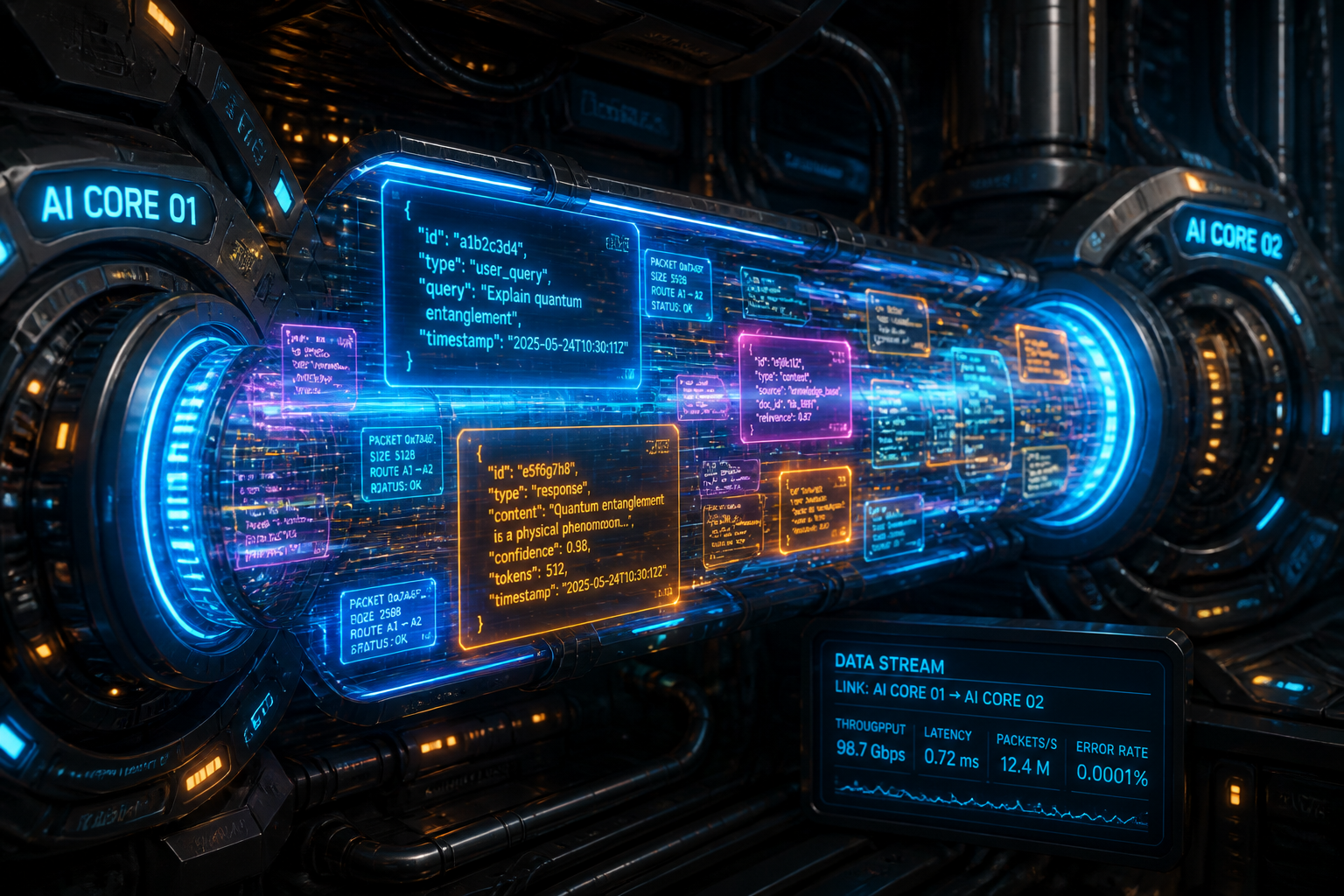
MCP supports different transports. The two most common are:
- stdio: Standard input/output. Used when the server runs locally on the same machine as the client (highly secure).
- SSE (Server-Sent Events): Over HTTP. Used for connecting to remote servers.
Dynamic Tool Invocation
When the LLM decides it needs to use a tool to fulfill a user request, a specific capability routing sequence occurs.
Capability Routing Flow
Click step-by-step to see how a tool is invoked.
Knowledge Check
How does an MCP Client know what tools are available on an MCP Server?
Security & Sandboxed Execution
Giving an AI access to tools can be dangerous. What if it tries to run `rm -rf /` or leak a database? MCP's architecture inherently promotes security through isolation.

Security Posture Checklist
Enable these MCP security features to see their impact.
Multi-Tool Orchestration
Real power emerges when a single MCP Client connects to multiple MCP Servers simultaneously, allowing the AI to orchestrate complex workflows across different domains.
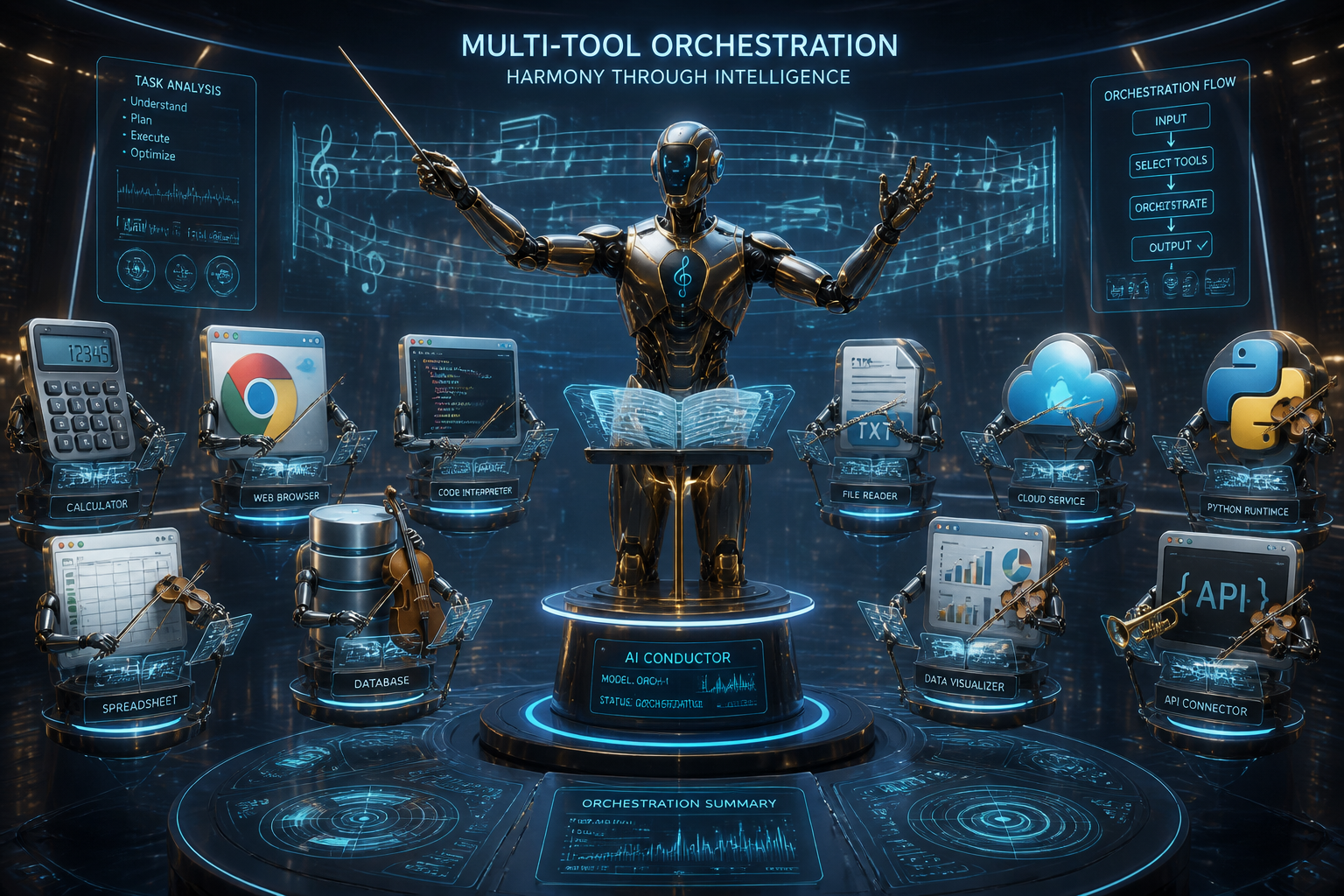
Orchestration Simulation
Task: "Investigate the user bug report in Jira, check the log file, and write a PR fix."
Click to equip the necessary servers to complete the task.
Building Agentic Ecosystems
MCP enables an ecosystem where tools are built once and used by any compliant AI agent (Claude, custom agents, etc.).
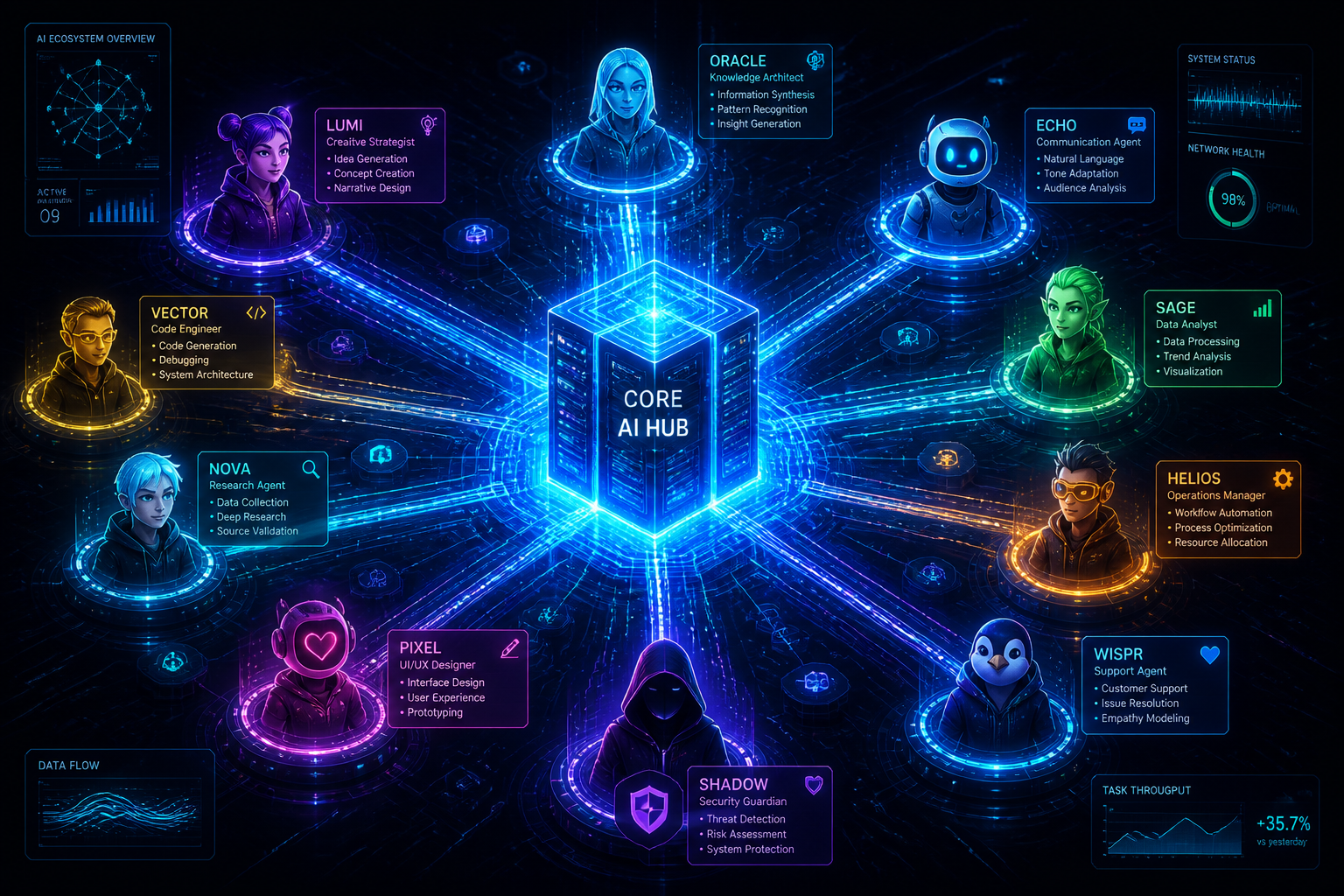
Select a Use Case
Knowledge Check
Why is running an MCP Server locally (using stdio transport) considered a major security benefit?
Key Takeaways
-
1Universal Standard: MCP acts as a "USB-C" for AI, standardizing how models connect to external tools and data via JSON-RPC.
-
2Architecture: It separates concerns into Hosts (the app), Clients (the connection manager), and Servers (the capability providers).
-
3Dynamic Discovery: Clients dynamically discover available tools and their required JSON schemas upon connection.
-
4Secure & Scalable: Enables safe local execution, sandboxing, and complex multi-server orchestration for autonomous agents.
Assessment
You have reached the end of the tutorial. It is time to test your knowledge of the Model Context Protocol.
Instructions:
- There are 5 questions.
- You must select an answer to proceed to the next question.
- You need a score of 80% (4/5) to pass and earn your certificate.
Good luck!